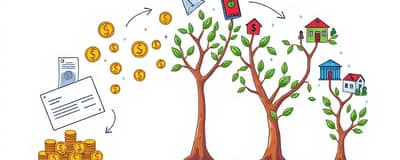
Money whispers secrets that can transform your life, yet many never learn to listen.
Finances are more than just numbers; they represent the heartbeat of your dreams and the fuel for your ambitions.
This journey begins with understanding that managing money is an art of balance and foresight.
It is about making informed choices that pave the way for stability and growth.
Often, the most powerful financial truths remain hidden, overshadowed by common myths and fears.
By uncovering these secrets, you can unlock a world of opportunities and peace of mind.
Let us dive into the essential practices that turn financial chaos into clarity.
The Invisible Budget: Seeing Beyond Your Spending
Many people believe they control their expenses, but reality often tells a different story.
An invisible budget involves tracking every penny, revealing where your money truly goes.
Start by listing all income sources and categorizing expenses into fixed and variable groups.
This simple act can expose wasteful habits and highlight areas for savings.
For example, small daily purchases can add up to significant amounts over time.
Use tools or apps to monitor spending and adjust your plan regularly.
Remember, a budget is not a restriction but a map to financial freedom.
- Fixed Expenses: Rent, utilities, insurance, and loan payments.
- Variable Expenses: Groceries, entertainment, dining out, and travel.
- Tracking Methods: Spreadsheets, budgeting apps, or handwritten journals.
- Review Frequency: Weekly or monthly to stay on track.
Consistency in budgeting builds discipline and empowers you to achieve your goals.
The Emergency Reserve: Your Financial Safety Net
Life is unpredictable, and financial shocks can derail even the best plans.
An emergency fund acts as a buffer against unexpected events like job loss or medical bills.
Aim to save enough to cover three to six months of essential expenses.
Keep this money in a high-liquidity, low-risk account for easy access.
This fund provides peace of mind and prevents debt accumulation during crises.
Start small if needed, and gradually increase your savings over time.
Think of it as insurance for your financial well-being.
- Why It Matters: Prevents reliance on high-interest loans or credit cards.
- Where to Save: Savings accounts, money market funds, or certificates of deposit.
- How to Build: Automate transfers from your paycheck or windfalls.
- When to Use: Only for genuine emergencies, not discretionary spending.
This secret shields you from life's uncertainties and fosters resilience.
Time vs. Money: The Power of Compounding
Time is your greatest ally in building wealth, yet it is often overlooked.
The value of money in time means that money today is worth more than in the future.
This is due to the potential for earning through interest or investments.
Start investing early to harness the magic of compounding over decades.
Inflation erodes purchasing power, so letting money sit idle can be costly.
For instance, investing $100 monthly with a 7% return can grow significantly over 30 years.
Embrace long-term thinking to turn small contributions into substantial assets.
Understanding these principles helps you make smarter financial decisions.
Hidden Risks: Navigating Financial Pitfalls
Risks lurk in every financial decision, but awareness can turn them into opportunities.
Alavancagem or leverage, using borrowed funds, can amplify gains but also losses.
It is vital to assess your risk tolerance before taking on debt for investments.
Diversification is key to mitigating risks across different asset classes.
For example, putting all your money in one stock is riskier than a mixed portfolio.
Stay informed about market trends and economic indicators that affect your finances.
Avoid common traps like impulse spending or ignoring inflation's impact.
- Types of Risks: Market risk, credit risk, liquidity risk, and operational risk.
- Risk Management Strategies: Insurance, hedging, and regular portfolio reviews.
- Common Pitfalls: Overconfidence, lack of planning, and emotional decision-making.
- Tools for Assessment: Risk tolerance questionnaires and financial advisors.
By anticipating risks, you can protect your wealth and seize growth chances.
Corporate Concepts for Personal Use: Adapting Business Wisdom
Business finance principles can be powerful tools for personal money management.
Capital de giro or working capital, the difference between current assets and liabilities, ensures daily liquidity.
Apply this by maintaining a cushion in your checking account for unexpected expenses.
The break-even point, where income equals costs, helps set savings targets.
For personal finances, calculate how much you need to save to cover future goals.
Flow of cash analysis tracks inflows and outflows, similar to budgeting.
Use a simple balance sheet to list your assets, debts, and net worth periodically.
This approach brings clarity and control to your financial landscape.
- Personal Balance Sheet: List assets (savings, investments) and liabilities (loans, mortgages).
- Cash Flow Statement: Record monthly income and expenses to identify trends.
- Adapted Metrics: Debt-to-income ratio, savings rate, and investment return rate.
- Benefits: Improved decision-making, early problem detection, and goal alignment.
Embracing these concepts bridges the gap between personal and professional finance.
Practical Tools: Simplifying Financial Management
Equip yourself with tools that demystify finances and make management effortless.
Understand terms like MTIC (Total Amount Imputed to Consumer) for loans, which includes all costs.
Always check TAEG (Annual Effective Global Rate) to compare credit offers accurately.
Create a plan of accounts to categorize expenses, similar to business accounting.
Use apps or software to automate tracking and generate reports.
Set SMART goals: Specific, Measurable, Achievable, Relevant, and Time-bound.
Regularly review your financial health to stay on course and adjust as needed.
These tools empower you to take proactive and informed actions.
- Financial Apps: Mint, YNAB, or Personal Capital for budgeting and investing.
- Key Terms: Amortization (loan principal repayment), Spread (lender's profit margin).
- Documentation: Keep records of transactions, contracts, and investment statements.
- Education Resources: Books, online courses, and workshops to boost literacy.
With the right tools, financial management becomes a habit rather than a chore.
Conclusion with FAQs: Your Path Forward
Mastering finances is a journey of continuous learning and adaptation.
Start small, stay consistent, and celebrate progress along the way.
Remember, the secrets shared here are stepping stones to a secure future.
Embrace curiosity and resilience as you navigate your financial path.
Below are answers to common questions to guide your next steps.
- What is capital de giro? It is the funds available for day-to-day operations, crucial for avoiding cash shortages.
- How much should I save for emergencies? Aim for 3-6 months of expenses, but adjust based on your comfort level.
- Why is diversification important? It reduces risk by spreading investments, preventing total loss from one asset's failure.
- What is the time value of money? Money today can earn interest, making it more valuable than the same amount in the future.
- How do I start investing? Begin with low-cost index funds or robo-advisors, and increase contributions over time.
Take action today, and let these insights light your way to financial empowerment.